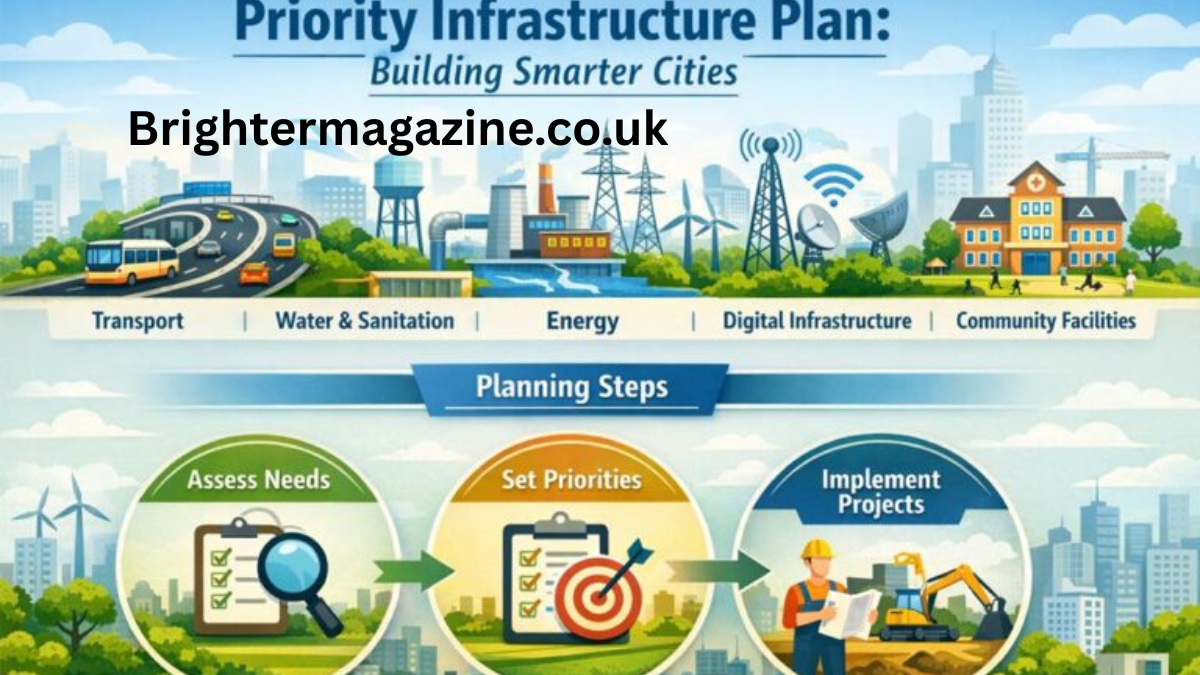
A complete guide to the priority infrastructure plan, its importance, benefits, challenges, and implementation strategies for sustainable development.
Introduction
A rapidly developing world demands smarter planning, stronger systems, and long-term thinking. This is where a priority infrastructure plan becomes essential. It helps governments and organizations decide which infrastructure projects should be developed first based on urgency, impact, and available resources.
A well-designed priority infrastructure plan is not just about building roads or bridges; it’s about creating sustainable systems that support economic growth, public safety, and future resilience. In this article, we will explore how such planning works, why it matters, and how it shapes modern development strategies.
Table of Contents
- What is Priority Infrastructure Planning?
- Importance in Modern Development
- Key Components of Infrastructure Planning
- Benefits for Economy and Society
- Challenges and Practical Solutions
- Implementation Strategy for Success
- Conclusion
- Frequently Asked Questions
What is Priority Infrastructure Planning?
A priority infrastructure plan is a structured approach used to identify, evaluate, and rank infrastructure projects based on urgency and long-term value. It ensures that limited resources are used efficiently for maximum public benefit.
This type of planning is widely used in urban development, transportation systems, energy networks, and water management projects. It allows decision-makers to focus on high-impact projects first rather than spreading resources too thin across less important initiatives.
A strong priority infrastructure plan also considers population growth, environmental impact, and economic needs. It acts as a roadmap that aligns infrastructure development with national or regional goals.
Importance in Modern Development
Modern cities cannot function without well-organized infrastructure systems. Roads, electricity, communication networks, and water supply all depend on strategic planning. A priority infrastructure plan ensures that essential services are developed in the right order to avoid bottlenecks.
Without such planning, governments often face delays, budget overruns, and inefficient project execution. By prioritizing critical infrastructure, countries can improve public services and stimulate economic growth more effectively.
As one urban development expert said:
“Infrastructure is not just construction; it is the backbone of national progress and economic stability.”
This highlights how crucial a priority infrastructure plan is in shaping a country’s future.
Key Components of Infrastructure Planning
Every successful infrastructure strategy includes several important components that work together to ensure efficiency and sustainability.
The first component is assessment and data analysis, which involves evaluating current infrastructure conditions. This helps identify gaps and urgent needs that must be addressed first.
The second component is resource allocation, which ensures that financial and material resources are distributed wisely. A strong priority infrastructure plan depends heavily on accurate budgeting and forecasting.
Key Components Table
| Component | Description |
| Data Analysis | Evaluates current infrastructure conditions |
| Resource Allocation | Distributes funds and materials efficiently |
| Risk Assessment | Identifies potential environmental and economic risks |
| Project Ranking | Prioritizes projects based on urgency and impact |
| Monitoring Systems | Tracks progress and ensures accountability |
Each of these components plays a crucial role in making infrastructure planning more effective and sustainable.
Benefits for Economy and Society
A well-structured priority infrastructure plan brings numerous benefits to both society and the economy. One of the biggest advantages is improved efficiency in public spending, ensuring that money is used where it is needed most.
It also boosts economic development by creating jobs and improving transportation, communication, and energy systems. Better infrastructure attracts investors and enhances business opportunities.
On a social level, it improves quality of life by providing better access to essential services like healthcare, education, and clean water. Communities become more connected and resilient.
In simple terms, a priority infrastructure plan lays the foundation for long-term national growth and stability.
Challenges and Practical Solutions
Despite its advantages, implementing infrastructure planning is not without challenges. One major issue is limited funding, which often restricts the number of projects that can be completed.
Another challenge is political influence, which can sometimes shift priorities away from public needs. Additionally, environmental concerns and land acquisition issues can delay progress.
However, these challenges can be managed through transparent governance, smart budgeting, and community engagement. A modern priority infrastructure plan must be flexible enough to adapt to changing conditions while staying focused on long-term goals.
Implementation Strategy for Success
Successful implementation requires careful coordination between government bodies, engineers, and financial institutions. Clear communication and long-term vision are essential for effective execution.
Technology also plays a major role in improving infrastructure planning. Tools like GIS mapping, AI-based forecasting, and digital monitoring systems help improve accuracy and decision-making.
A strong priority infrastructure plan also depends on continuous evaluation. Regular updates ensure that projects remain aligned with current needs and future demands. Without proper monitoring, even well-designed plans can lose effectiveness over time.
Ultimately, success comes from combining strategy, innovation, and accountability in a balanced way.
Conclusion
Infrastructure is the foundation of any growing society, and planning it wisely is more important than ever. A priority infrastructure plan helps governments and organizations focus on what truly matters—building systems that support long-term growth, sustainability, and public well-being.
By carefully selecting and executing high-impact projects, countries can ensure better resource utilization and improved quality of life. In today’s fast-changing world, structured infrastructure planning is not just an option—it is a necessity.
FAQs About Priority Infrastructure Plan
What is a priority infrastructure plan?
A priority infrastructure plan is a strategic framework used to identify and rank infrastructure projects based on urgency, impact, and available resources. It ensures efficient development and resource use.
Why is a priority infrastructure plan important?
It is important because it helps governments focus on critical infrastructure needs first, reducing waste and improving public services while supporting economic growth.
What sectors benefit from infrastructure planning?
Sectors such as transportation, energy, water supply, healthcare, and telecommunications benefit significantly from structured infrastructure planning.
How does technology improve infrastructure planning?
Technology improves accuracy through data analysis, GIS mapping, AI forecasting, and real-time monitoring, making planning more efficient and reliable.
What are the main challenges in infrastructure planning?
Common challenges include limited funding, political interference, environmental concerns, and delays in project execution.
How can a priority infrastructure plan improve daily life?
It improves daily life by enhancing transportation, providing better utilities, increasing job opportunities, and ensuring access to essential services.
Also Read: foenegriek